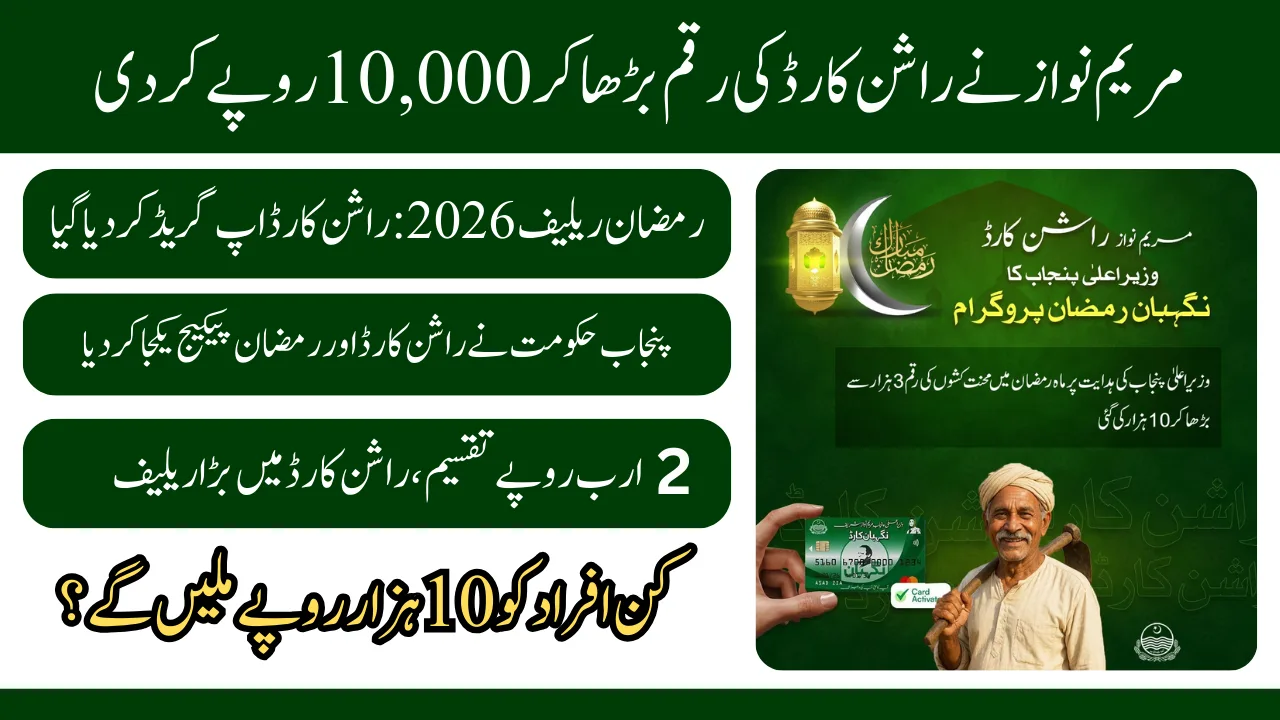

Punjab Chief Minister Maryam Nawaz Sharif has expanded her earlier Maryam Nawaz Rashan Card scheme by increasing the monthly support amount to Rs10,000 during Ramzan.
Previously, the Rashan Card provided Rs3,000 per month to low income families. This amount helped households buy essential grocery items such as flour, rice, cooking oil, sugar, and other daily use products.
Now, during Ramzan, the government has combined the Maryam Nawaz Rashan Card with the Nigehban Ramzan Package, increasing the total support to Rs10,000.
This step aims to provide stronger financial relief to workers and struggling families during the holy month.
What Was the Maryam Nawaz Rashan Card?
The Rashan Card was a monthly relief program designed to support:

- Daily wage workers
- Laborers
- Low income families
- Deserving households
Under the original system:
- Families received Rs3,000 every month
- The amount was meant for grocery purchases
- Support focused on essential household food items
The purpose was simple. Help families manage rising food prices and reduce financial stress.
What Has Changed in Ramzan?
During Ramzan, expenses increase for most families. Food consumption rises, and many households face additional financial pressure.
To address this, the Punjab government has:
- Increased the support amount from Rs3,000 to Rs10,000
- Combined the Rashan Card with the Ramzan Nigehban relief package
- Expanded assistance for deserving families
This means eligible families now receive significantly higher support during Ramzan.
Why the Amount Was Increased to Rs10,000
Ramzan brings spiritual blessings, but it can also bring financial challenges.
The increase to Rs10,000 helps families:
- Buy sufficient groceries for the entire month
- Manage higher food costs
- Cover basic kitchen expenses
- Reduce borrowing or debt
This decision reflects a targeted Ramzan relief strategy focused on economic stability.
How the Rs10,000 Support Works
The new Ramzan relief structure includes:
- Financial support valued at Rs10,000
- Distribution through an organized system
- Focus on deserving and verified households
In earlier phases, support was limited to Rs3,000 monthly. Now, during Ramzan, families receive enhanced assistance under a combined relief model.
Who Can Benefit?
The program mainly supports:
- Workers earning daily wages
- Low income earners
- Labor class families
- Financially struggling households
The objective is to ensure that no deserving family faces food shortage during Ramzan.
Impact of the Program
On the first day of launch, Rs2 billion was distributed, showing immediate implementation and serious intent.
This large scale distribution highlights:
- Fast execution
- Strong administrative planning
- Direct benefit to citizens
- Expanded Ramadan welfare coverage
The program strengthens social protection in Punjab during the holy month.
Economic Relief During Rising Prices
With increasing food prices, many families struggle to manage household budgets.
The upgraded Rs10,000 Ramzan support helps families:

- Maintain food security
- Manage monthly grocery spending
- Avoid financial crisis
- Celebrate Ramzan with dignity
This initiative combines regular ration support with seasonal Ramzan relief for maximum impact.
Why This Program Matters
The enhanced Rashan Card plus Ramzan package model is important because it:
- Targets real financial pressure points
- Supports working class families
- Increases assistance when expenses are highest
- Ensures timely relief during Ramzan
The increase from Rs3,000 to Rs10,000 represents a significant welfare expansion.
Quick Summary
- Previous Rashan Card amount: Rs3,000 per month
- Ramzan updated support: Rs10,000
- Combined model: Rashan Card + Nigehban Ramzan Package
- Target group: Low income and working families
- First day distribution: Rs2 billion
This expanded Ramzan relief program aims to protect vulnerable families during a critical month.


Maryam Nawaz is very good, she made us think she is very good.