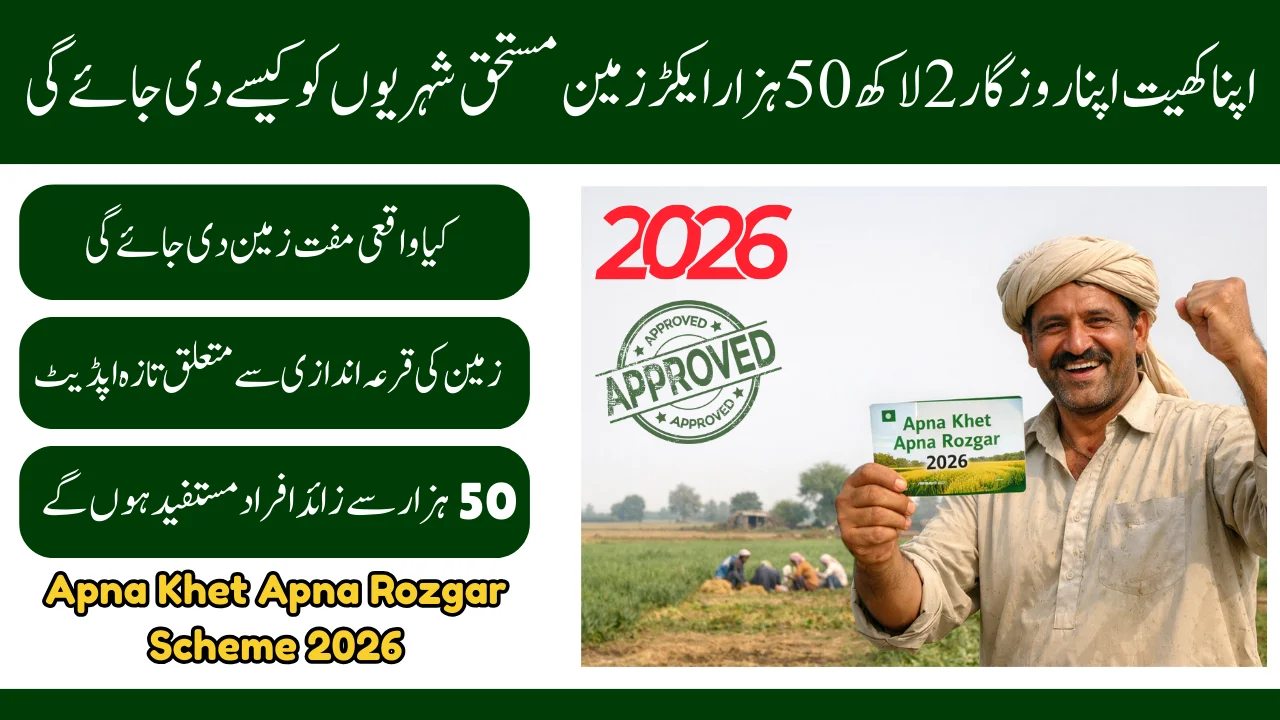

Apna Khet Apna Rozgar Scheme is a large-scale rural empowerment initiative that aims to turn landless citizens into self-employed farmers. Under this scheme, the Punjab government plans to distribute 250,000 acres (2 lakh 50 thousand acres) of state land to deserving people through a transparent balloting system, with each selected person receiving 3 to 5 acres for farming.
In my opinion, this single decision makes apna khet apna rozgar far more trustworthy than many past schemes. Balloting ensures fairness and gives equal opportunity to deserving landless farmers and youth across Punjab.
What Is Apna Khet Apna Rozgar Really About?
At its core, apna khet apna rozgar is built on one simple idea:
Give land to those who are ready to work on it.
Instead of short-term financial support, this initiative focuses on ownership with responsibility. People who receive land are expected to cultivate it themselves and earn through agriculture.
This vision has been introduced under the leadership of Maryam Nawaz Sharif through the Government of Punjab, with a strong focus on rural development, food security, and self-reliance.
I personally like this approach because it encourages effort, not dependency.
Total Land Allocation and Balloting System Explained
One of the most important updates people wanted to know is how land will actually be given.
Key Land Distribution Plan
- Total land allocated: 250,000 acres (2 lakh 50 thousand acres)
- Land will be distributed through official balloting
- Only selected candidates will receive land
- No recommendations, no influence, no shortcuts
Balloting ensures fairness. In my opinion, this single step makes apna khet apna rozgar far more trustworthy than many past schemes.
Apna Khet Apna Rozgar – Land & Beneficiary Overview
| Category | Details |
|---|---|
| Total State Land | 250,000 acres |
| Distribution Method | Balloting system |
| Land Per Person | 3 to 5 acres |
| Target Beneficiaries | 50,000 landless farmers and youth |
| Cost | Free (government land) |
| Purpose | Farming, self-employment, income generation |
| Province | Punjab |
This structure answers many common questions people search about apna khet apna rozgar in one clear view.
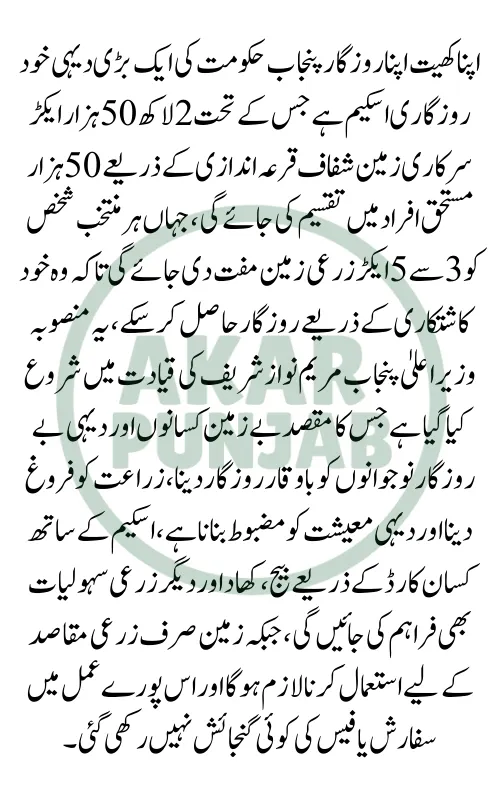
Who Are the Target Beneficiaries?
The scheme has a clearly defined target. It is not for everyone, and that is intentional.
Main Beneficiaries
- Landless farmers
- Unemployed rural youth
- Low-income families with farming background
- People willing to cultivate land themselves
The total target is 50,000 beneficiaries, which shows this is a planned program, not a symbolic announcement.

From my experience, schemes with clear targets perform better and stay accountable.
How Much Land Will One Person Get?
This is one of the most common searches related to apna khet apna rozgar.
Land Per Person
- Minimum: 3 acres
- Maximum: 5 acres
No one will receive more than 5 acres. This limit allows more families to benefit and prevents land concentration.
I believe this is a practical size for income-generating farming if used properly.

Additional Support: Kisan Card for New Farmers
Land alone is not enough, especially for first-time farmers. That is why apna khet apna rozgar is linked with an additional benefit: the Kisan Card.
Kisan Card Support Includes
- Purchase of seeds
- Help with fertilizers
- Access to basic farming inputs
This support helps beneficiaries start farming without heavy upfront costs. In my opinion, this is one of the most important parts of the scheme.
What Happens After Land Is Handed Over?
Many people ask: “What next after getting land?”
After allotment, beneficiaries are expected to:
- Cultivate crops
- Use land only for agriculture
- Follow government guidelines
- Work with local agriculture departments for guidance
Support through training and agriculture offices is expected to help farmers succeed, especially in the first few seasons.
Why Apna Khet Apna Rozgar Is Being Searched Again and Again
The reason apna khet apna rozgar keeps trending is simple:
- Information is released step by step
- People want clarity and confirmation
- The scheme affects real livelihoods
This repeated interest shows that the scheme has real public relevance, not just media attention.

Long-Term Impact of Apna Khet Apna Rozgar
If implemented honestly, this scheme can:
- Increase land under cultivation
- Reduce rural unemployment
- Strengthen village economies
- Improve food availability
- Reduce migration to cities
From my point of view, land-based employment creates stability that temporary jobs cannot.
Final Thoughts
Apna khet apna rozgar is not just a scheme; it is a long-term vision for rural Punjab. With 250,000 acres, balloting-based selection, 3 to 5 acres per person, 50,000 target beneficiaries, and Kisan Card support, this program has the potential to change lives.
I believe its success will depend on transparency and follow-through. If done right, this could become one of the most meaningful rural initiatives in recent years.
