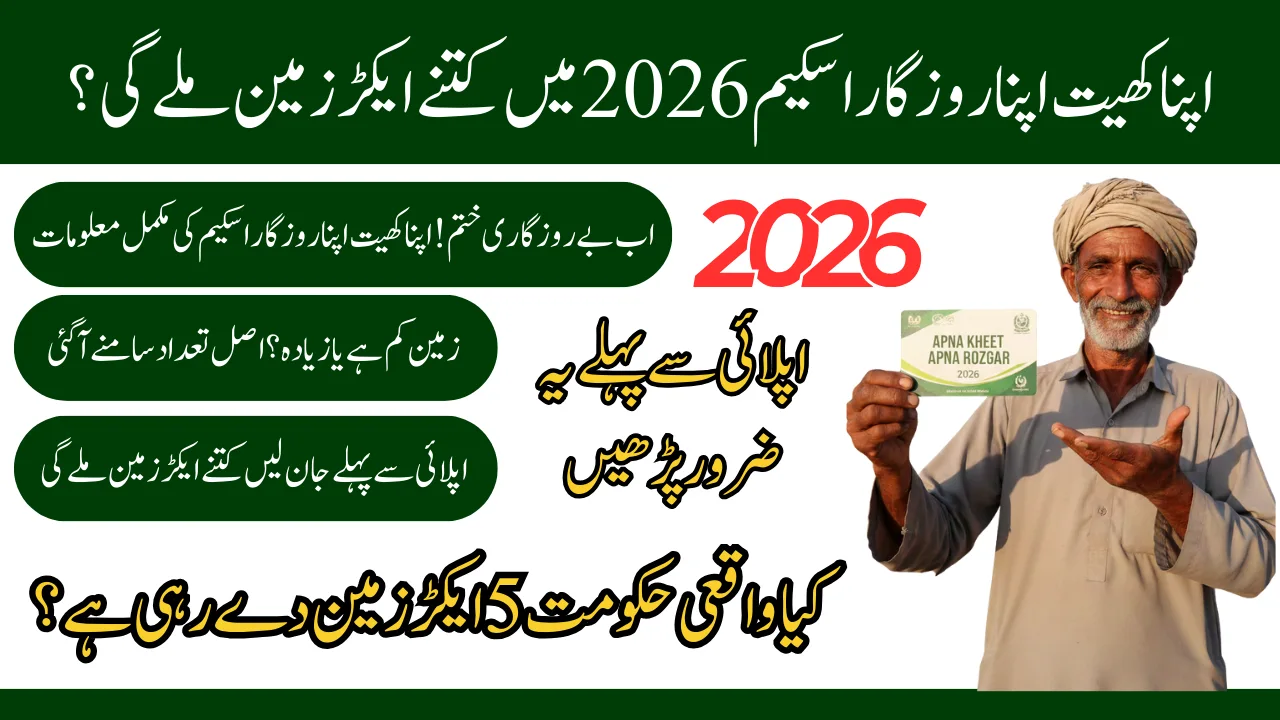

How Many Acres in Apna Khet Apna Rozgar scheme are actually given to one person? well in this scheme person 3 to 5 Acres. This limit is fixed by the Punjab government to ensure fair distribution, create self-employment, and allow more landless citizens to benefit from the program.
In my opinion, this scheme is not just about land distribution. It is about creating self-employment, reviving agriculture, and giving dignity to people who want to work but lack resources.
What Is Apna Khet Apna Rozgar Scheme 2026?
The Apna Khet Apna Rozgar scheme 2026 is a Punjab government initiative that provides free agricultural land to underprivileged and unemployed citizens. The goal is to help people earn a living through farming instead of relying on aid or temporary jobs.
This project was announced by Maryam Nawaz Sharif as part of a broader plan to strengthen agriculture and rural employment. The scheme focuses on unused state land and aims to turn it into productive farmland managed by deserving citizens.
I like this approach because it gives people ownership, responsibility, and long-term income potential, instead of short-term relief.
How Many Acres in Apna Khet Apna Rozgar Scheme? (Clear Answer)
This is the most searched and important question.
Land Allocation Details
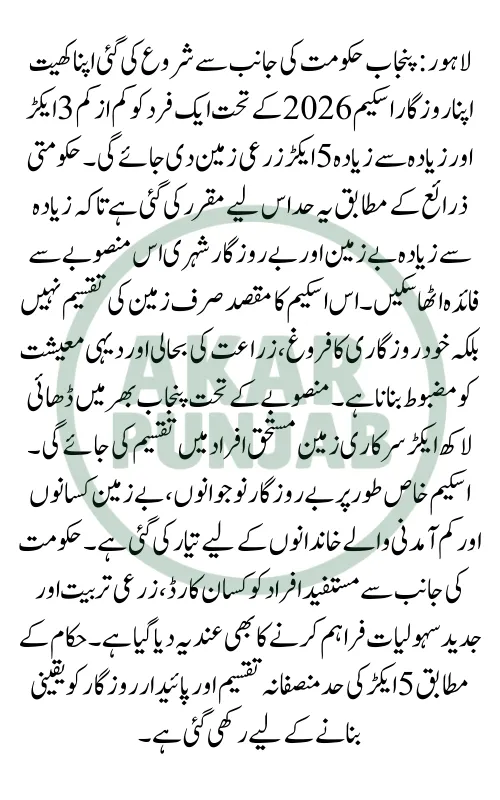
Under the Apna Khet Apna Rozgar scheme 2026, each eligible beneficiary will receive:

- Minimum land: 3 acres
- Maximum land: Up to 5 acres
The land size depends on availability, location, and eligibility assessment. The government has clearly stated that no one will receive more than 5 acres under this scheme.
Total Land Distribution Plan
- Total state land to be distributed: 250,000 acres
- Land will be divided among thousands of beneficiaries across Punjab
This clearly answers how many acres in Apna Khet Apna Rozgar scheme can be given to one person: up to five acres only.

Key Features of Apna Khet Apna Rozgar Scheme 2026
| Feature | Details |
|---|---|
| Scheme Name | Apna Khet Apna Rozgar Scheme 2026 |
| Land per Person | 3 to 5 acres (free) |
| Total Land Pool | 250,000 acres of state land |
| Cost | Completely free |
| Target Group | Unemployed, underprivileged citizens |
| Purpose | Self-employment through agriculture |
| Land Ownership | Use-rights under government terms |
| Province | Punjab |
This structure makes the scheme realistic and transparent.
Who Can Benefit from This Scheme?
The scheme is mainly designed for people who want to work in agriculture but do not own land.
Likely Eligible Groups
- Unemployed youth
- Landless farmers
- Rural families with farming experience
- Low-income households
In my view, this scheme is especially useful for people who already understand basic farming but lack land ownership.
Why the 5-Acre Limit Matters
Some people ask why the government fixed a maximum of 5 acres. The reason is fairness and sustainability.
- Smaller land sizes allow more people to benefit
- 3 to 5 acres is enough for income-generating farming
- Prevents land concentration in a few hands
I personally think this limit is practical. With proper support, even 3 acres can provide a stable livelihood.
Additional Support Linked with the Scheme
The Punjab government is not stopping at land distribution. Several supportive steps are planned alongside this scheme:

- Kisan Card for buying seeds, fertilizers, and pesticides
- Digital agriculture tools like drone spraying
- Centers of Excellence in every tehsil for farmer training
These steps are part of the larger agriculture modernization vision of the Government of Punjab.

How This Scheme Creates Rozgar (Employment)
The Apna Khet Apna Rozgar scheme 2026 directly creates employment by:
- Turning unemployed citizens into self-employed farmers
- Increasing crop production
- Supporting rural economies
- Reducing migration to cities
In my opinion, land-based employment is more stable than daily wage labor, especially in rural Punjab.
Final Thoughts
To clearly answer the main question again:
How many acres in Apna Khet Apna Rozgar scheme?
Each eligible person can get between 3 and up to 5 acres of free land.
I believe this scheme can genuinely change lives if implemented transparently. It gives people land, purpose, and a chance to earn with dignity. If you or someone in your family is eligible, this is an opportunity worth watching closely in 2026.
